1. Global News Sources Point to a Crowded Canada-U.S. Trade Agenda
Global News reported that sources close to the Canada-U.S. trade file describe 'multiple trade issues' still outstanding after recent talks between Ottawa and Washington. The report does not name a single breakthrough. It points to a bargaining agenda with several separate files, each with its own constituency and legal mechanism. Canadian officials have publicly stressed co-operation on supply chains and critical minerals. U.S. officials have pressed market access and tax treatment. That gap matters. A broad political headline can hide unresolved sector rules that still carry tariffs, audits and border delays.
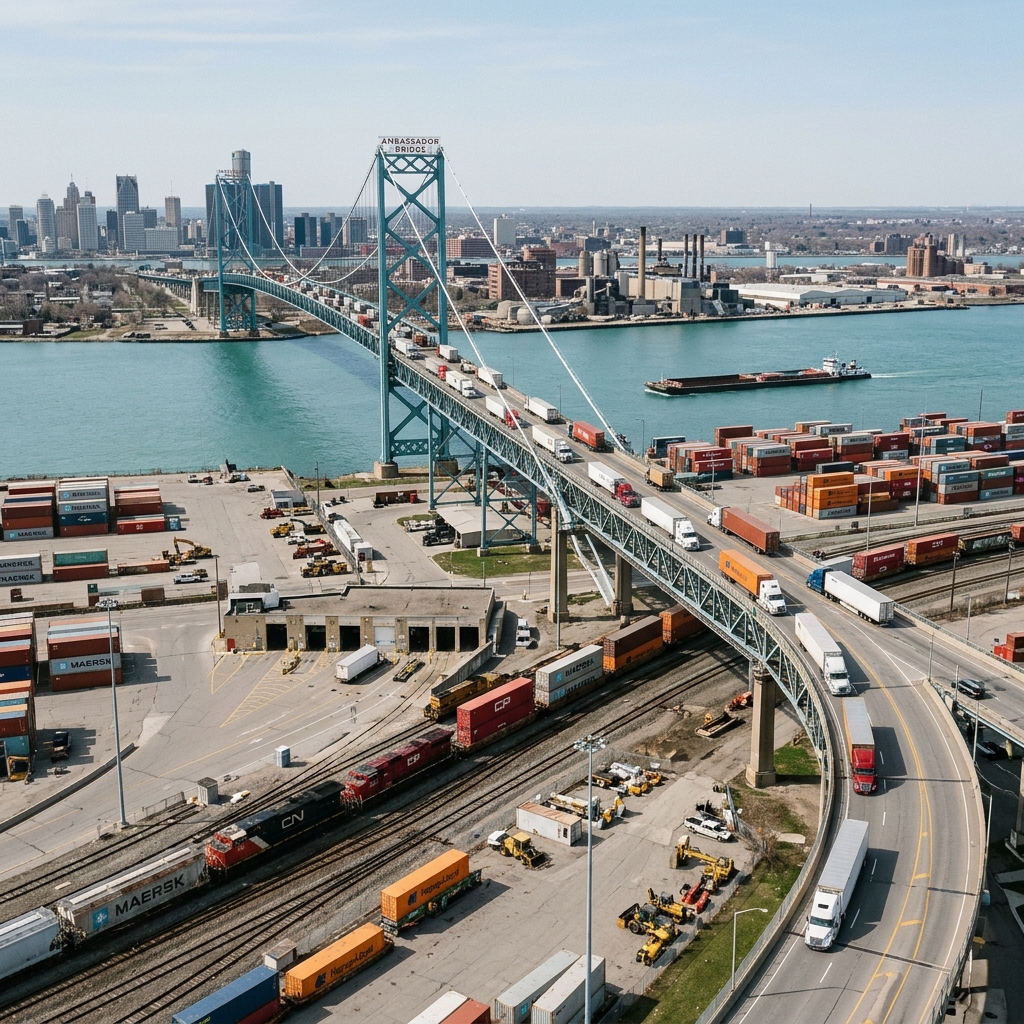
The two economies exchange roughly C$3.6 billion in goods and services every day. That volume crosses the Ambassador Bridge at Windsor-Detroit, the Blue Water Bridge at Sarnia-Port Huron, the Pacific Gateway ports and the CPKC rail network. U.S. Customs and Border Protection and the Canada Border Services Agency process the freight. One unresolved rule can slow a shipment at a border booth or trigger a post-entry audit. For manufacturers, the cost includes the duty, working capital tied up in customs bonds, broker fees and contingency inventories.
Each outstanding issue has its own decision chain. Dairy market access runs through Canada's supply management system and USMCA tariff-rate quotas. Softwood lumber runs through U.S. anti-dumping and countervailing duty cases and Chapter 19 binational panels. Canada's digital services tax runs through the CRA and the U.S. Trade Representative. Auto content rules run through CBP verification and USMCA panels. Buy American provisions run through federal procurement rules. Negotiators cannot settle these files with one sentence. They need separate legal fixes, and some fixes require action from regulators rather than cabinet ministers.
2. Tariffs, Taxes and Auto Content Rules Keep Negotiators at the Table
Tax policy is one of the hardest files. Canada's 3% digital services tax applies to large technology firms with global revenue above EUR 750 million and Canadian digital revenue above C$20 million. Washington has challenged the tax through the U.S. Trade Representative. The CRA administers it. A negotiated pause or credit system would need clear guidance for companies that already booked liabilities. The U.S. side also wants assurances on transfer pricing and information sharing between the IRS and the CRA. Those issues matter to boards because they affect effective tax rates and cash planning.
Auto rules of origin remain a live dispute. USMCA requires 75% regional value content for passenger vehicles and light trucks. It also requires 40% to 45% high-wage labor content. CBP verifies claims through audits and requests for production records. Canada and Mexico have challenged U.S. interpretations of core parts and advanced technology provisions. A USMCA dispute panel can issue a finding, but compliance takes time. Automakers on both sides of the border must trace steel, aluminum, semiconductors and battery components through complex supply chains. An adverse ruling can turn a duty-free shipment into a dutiable one.
Border fees and processing rules add another layer. CBP user fees, broker licensing and de minimis thresholds differ from Canadian rules. Canada's de minimis threshold is C$40 for duties and taxes, while the U.S. threshold is US$800. Small exporters can face different compliance burdens on each side. CBSA's CARM system and CBP's ACE system are the operational interfaces. When negotiators leave a fee or threshold unresolved, carriers absorb the cost through surcharges and longer dwell times. The Ambassador Bridge and Blue Water Bridge have little spare capacity at peak hours, so small procedural changes can create large queues.
3. Border Agencies and USMCA Panels Carry the Dispute Mechanics
USMCA dispute panels are the formal route for state-to-state complaints. Chapter 19 panels hear appeals of anti-dumping and countervailing duty findings, including softwood lumber cases. Chapter 31 panels hear claims that a party has breached the agreement, including dairy tariff-rate quota administration. A panel ruling can authorize retaliation if a party fails to comply. The process is legalistic and slow. It also gives negotiators a fallback when political talks stall. Global News sources say multiple issues remain outstanding, so panel dockets and compliance deadlines will matter as much as leader-level statements.
Border agencies carry the practical burden. CBP and CBSA must apply rules that negotiators may leave ambiguous. Origin audits, valuation checks and tariff classification reviews can happen months after a shipment clears. The Pacific Gateway handles container traffic from Asia that moves through Canada into the U.S. Midwest. CPKC and Canadian National rail networks move autos, grain and energy equipment across the border. A dispute over auto content or agriculture quotas can redirect freight or force shippers to use more expensive routes. Those operational shifts show up in freight rates before they show up in trade statistics.
Financial markets watch the corridor through the Bank of Canada and the Federal Reserve. The Bank of Canada's Business Outlook Survey and the Fed's Beige Book both track cross-border demand. A 100-basis-point move in the Canada-U.S. two-year yield spread can shift the Canadian dollar and the cost of imported machinery. Exporters price contracts in U.S. dollars and hedge with forward contracts. When trade talks stall, volatility rises and hedging costs increase. The Bank of Canada cannot settle a tariff dispute, but its rate path affects how much pain exporters can absorb while negotiators work through the files.
4. A Narrow Deal Would Leave Sector Risk Alive for Exporters
The likely outcome is a narrow package, not a comprehensive settlement. Ottawa and Washington can announce progress on critical minerals, supply-chain mapping or border wait times without resolving dairy, softwood lumber or the digital services tax. Global News sources describe multiple outstanding issues, and that language matters. It tells exporters that sector-specific duties and tax disputes will remain alive after any leader-level announcement. Companies should plan for a long series of audits, panel rulings and regulatory guidance. A headline that sounds like a deal may leave the operating rules unchanged for many firms.
Corporate planning should start with rules of origin and tax provisioning. Auto suppliers need documentation for steel, aluminum and battery components. Agriculture exporters need quota and licensing certainty. Technology firms need to model CRA assessments and USTR retaliation risk. Transfer pricing teams at U.S. and Canadian subsidiaries should review intercompany charges. Customs brokers should prepare for CBP and CBSA audits. Investors should watch USMCA panel deadlines and the 2026 joint review of the agreement. The review will force both governments to publish their priorities and expose which files remain unresolved.
The stakes are large because Canada sends about 75% of its goods exports to the United States. Ontario's auto corridor, Quebec's aluminum sector, British Columbia's softwood industry and Prairie agriculture all depend on predictable border rules. A prolonged dispute can push buyers to alternate suppliers in Mexico or Asia. It can also raise the cost of the U.S. content that Canadian producers use. The Global News report is a warning about process. The negotiating agenda is crowded, the legal routes are separate and the border agencies are already enforcing the rules that exist.