1. Trump's 'Ripping Us Off' Attack Hits a $1.2 Trillion Trade Relationship
Donald Trump's latest trade attack on Canada was blunt. Newsweek reported that Trump called Canada 'very difficult' and accused Ottawa of 'ripping us off.' The language revives the grievance politics of the 2018 steel and aluminum tariff fight. It matters because the two countries share the most integrated economic relationship in North America, and that relationship supports millions of jobs on both sides of the border. The remarks also come as U.S. and Canadian officials prepare for the scheduled 2026 review of the U.S.-Mexico-Canada Agreement, known as USMCA in Washington and CUSMA in Ottawa.
The numbers explain why the charge works in U.S. politics and why it frustrates Canadian officials. Bilateral goods and services trade is about $1.2 trillion a year. U.S. Census Bureau data put the U.S. goods deficit with Canada near $64 billion in 2023. Crude oil, natural gas, electricity and refined products drive much of that figure. Canada supplies roughly 4 million barrels a day of crude to U.S. refineries, especially in the Midwest and Gulf Coast. Strip out energy and the U.S. goods balance with Canada narrows sharply. Canadian diplomats make that point in every trade briefing.
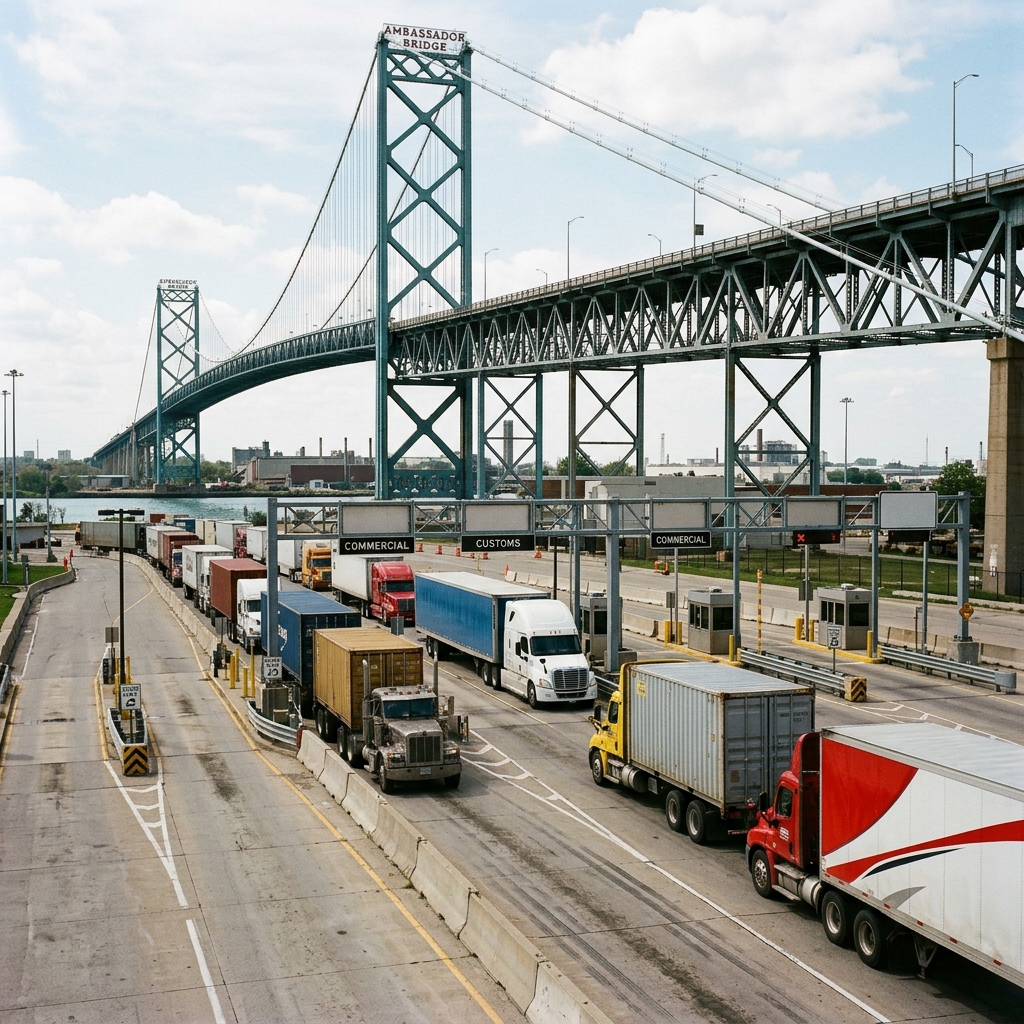
Canadian trade officials say the deficit reflects geography and investment, not theft. Canadian crude reaches U.S. refineries through Enbridge's Mainline and other pipelines. U.S. refiners gain from heavy crude that replaces barrels from Venezuela and the Middle East. The same integration runs through autos, aerospace, agriculture and chemicals. Ontario and Michigan swap parts across the Ambassador Bridge and the Blue Water Bridge dozens of times before a vehicle is finished. Trump's language compresses that complexity into a single grievance. The political effect is immediate. The policy effect depends on whether rhetoric becomes tariffs, border fees or renegotiation demands.
2. Currency, Tax and Regulatory Channels Carry the First Shock
Markets read trade threats through the Canadian dollar, rate spreads and credit conditions. The Bank of Canada's policy rate has traded below the Federal Reserve's target range by roughly 100 to 150 basis points at points in the past year. That gap reflects weaker Canadian growth and lower inflation. It also makes CAD-sensitive exporters more vulnerable when Washington talks tariffs. A tariff threat can widen the spread in forward markets before any CBP notice is published. The Bank of Canada watches the exchange rate for imported inflation. The Fed watches it for financial conditions. Both central banks know a trade shock can move the loonie faster than either can adjust rates.
Tax and customs mechanics matter as much as the headline. The Canada Revenue Agency and the Internal Revenue Service police transfer pricing for cross-border affiliates. A tariff fight can trigger audits and withholding-tax disputes. CBP collects duties at ports of entry. The Canada Border Services Agency applies its own valuation and origin rules. Under USMCA, automotive rules of origin require 75 percent regional value content for tariff-free treatment. A vehicle that fails that test can face a 2.5 percent U.S. passenger car tariff or higher light-truck duties. Compliance teams at Stellantis, Ford, General Motors and Magna already model those scenarios.
Equity markets have a narrower lens. Railroads such as CPKC and Canadian National carry chemicals, grain, auto parts and finished vehicles across the border. CPKC's network links Kansas City, Chicago, Toronto and Monterrey. Its cross-border volumes are sensitive to customs delays. Energy producers and pipeline operators watch presidential rhetoric for permit risk and tariff risk. Canadian banks with U.S. operations watch credit exposure to exporters. The Toronto Stock Exchange's energy and industrial sectors often underperform when trade headlines intensify. This is not theoretical. Every basis point of added risk premium raises the cost of capital for Canadian firms that invest in U.S. plants.
3. USMCA Panels, Border Agencies and Freight Corridors Absorb the Pressure
USMCA has dispute panels for dairy, softwood lumber, automotive origin and labor enforcement. Canada's dairy supply management has been challenged repeatedly under USMCA and its predecessor, NAFTA. Softwood lumber remains outside USMCA's core tariff disciplines. It is fought through U.S. Commerce Department reviews and World Trade Organization cases. Automotive rules of origin are enforced through CBP audits and binational panel reviews. A Trump attack on Canada can become a formal consultation request within weeks. The U.S. Trade Representative's office has a legal playbook. Canada's Global Affairs Canada has its own. The panels are slow, technical and expensive. They are also the main brake on retaliation.
Border agencies are the physical choke point. CBP and CBSA process millions of trucks each year at Ambassador Bridge, Blue Water Bridge, Peace Bridge and Pacific Highway. The Ambassador Bridge alone carries about 25 percent of U.S.-Canada merchandise trade by value. The Blue Water Bridge handles a large share of auto and chemical flows between Michigan and Ontario. The Pacific Gateway moves Asian goods through Vancouver and Prince Rupert before they enter U.S. markets by rail. CPKC and Canadian National run double-stack trains through those gateways. A new inspection fee or tariff line can add hours to a just-in-time supply chain.
Supply chains in autos and agriculture have little slack. A seat, wiring harness or engine block can cross the border several times before final assembly. U.S. and Canadian parts makers use USMCA certificates of origin to avoid duties. CBP audits can claw back benefits years later. Agricultural exporters depend on cold-chain logistics through the Pacific Gateway and on rail hoppers moving Prairie grain to U.S. and Asian buyers. A tariff on Canadian potash would hit U.S. fertilizer costs. A tariff on U.S. machinery would hit Canadian farm investment. These are the mechanisms that turn a political quote into a price change at a factory gate.
4. The 2026 USMCA Review Is the Real Battleground
The political noise points to a fixed calendar. USMCA requires a joint review in 2026. Each party can then extend the pact or let it lapse into annual reviews. Trump's remarks give U.S. negotiators a public demand list: dairy access, digital services taxes, automotive content, energy and border enforcement. Canada's government has limited room to concede before a federal election or a leadership transition. Mexico's role complicates the math because U.S. officials want stricter rules on Chinese content and transshipment. A bilateral U.S.-Canada fight can become a trilateral negotiation within days. Business groups on both sides are already preparing submissions to the USTR and Global Affairs Canada.
Canada's strategic response has three tracks. The first is diversification through the Pacific Gateway and new trade corridors to Asia and Europe. The second is energy and critical minerals, where Canada wants U.S. and allied investment in lithium, nickel, copper and uranium. The third is regulatory alignment on border processing, food safety and vehicle standards. None of those tracks removes the U.S. market's pull. About 75 percent of Canadian goods exports go to the United States. Canadian firms can add customers in Asia and Europe, but they cannot replace the scale of the U.S. consumer market. That asymmetry shapes every negotiation.
Executives and investors should watch three indicators. First, the spread between Bank of Canada and Fed policy rates, because it prices relative risk. Second, CBP and CBSA notices on tariffs, fees and origin audits, because they change landed costs. Third, USMCA panel filings and the 2026 review timetable, because they signal which sectors face legal risk. Companies with cross-border plants should stress-test cash flow under a 10 percent tariff scenario and a 48-hour border delay. Investors should separate political headlines from customs rulings. The headline is loud. The bill of lading is where the damage shows up.