1. Trump Team Moves From Broad Threat to Narrow Tariff List as CBP and USTR Write the Fine Print
Axios reported this week that President Donald Trump's trade team is preparing a new round of targeted tariffs. That is a shift from the broad universal levy that dominated early transition talk. The final list remains fluid. Officials are weighing sector-specific actions under Section 232, Section 301, and emergency trade authorities. The practical work sits with the Office of the U.S. Trade Representative and U.S. Customs and Border Protection. CBP will need new Harmonized Tariff Schedule lines, origin instructions, and entry summaries before any duty collects at ports and land crossings.
The political signal is narrower than the legal machinery. A targeted tariff can hit a single product family, such as steel coils, aluminum extrusions, electric-vehicle battery components, or critical minerals. It can also apply by country of origin and by producer. That distinction matters for Canadian exporters because roughly $420 billion of U.S. goods imports came from Canada in 2023. A tariff aimed at a handful of HS codes can still reach hundreds of suppliers across Ontario, Quebec, and Alberta. The damage depends on the code, the rate, and the origin test.
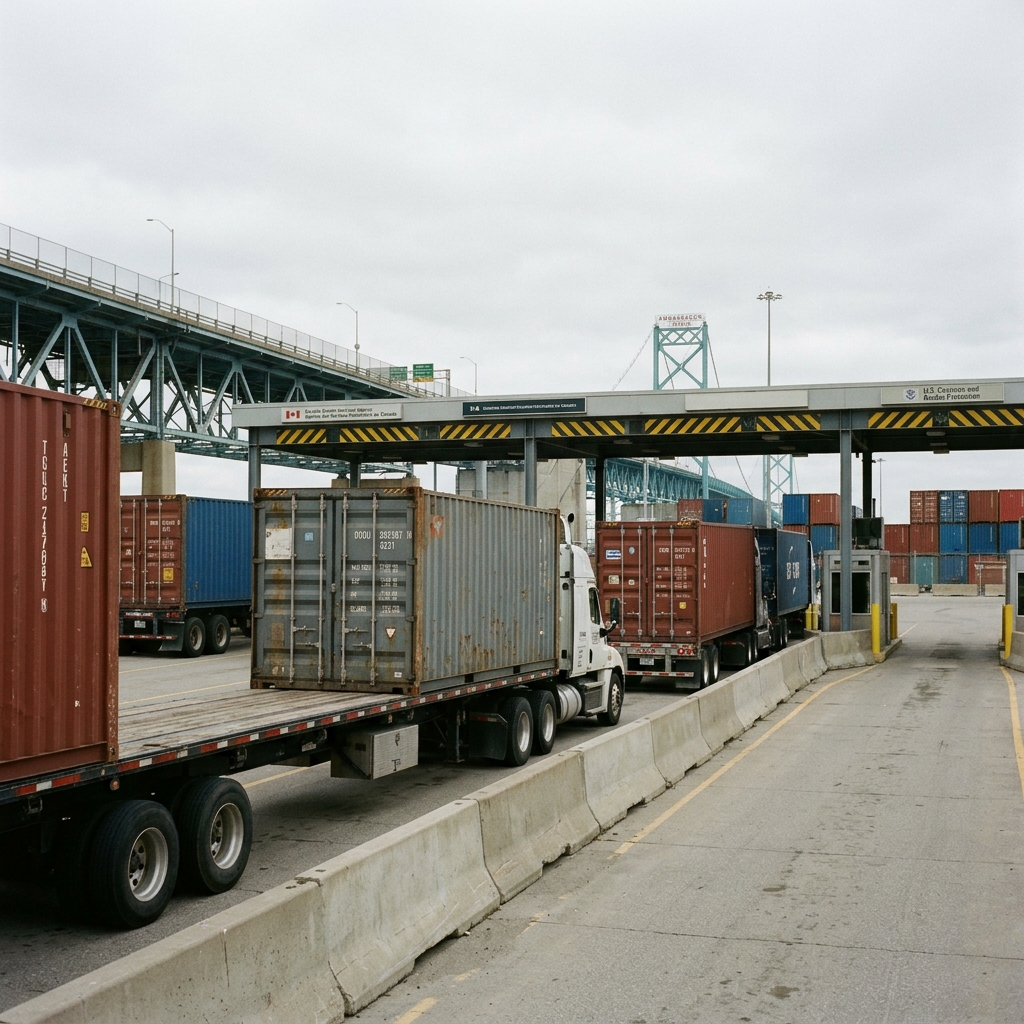
Trump's first term showed how quickly a narrow action becomes a compliance exercise. Section 232 steel and aluminum duties began with product lists and exclusions. They then generated thousands of administrative requests. The new round is likely to follow a similar path. CBP's Commercial Targeting and Analysis Center will screen entries. CBSA will face reciprocal questions from Canadian shippers. Freight brokers at Ambassador Bridge and Blue Water Bridge will need proof of origin before trucks clear. The tariff rate is one number. The paperwork decides whether goods move.
2. Markets Price a Narrow Shock as Bank of Canada and Fed Weigh Tariff Inflation Against Rate Cuts
Currency and bond desks have started to price a targeted tariff round as a supply shock with a regional footprint. The Bank of Canada and the Federal Reserve face different inflation channels. Canada's exposure is concentrated in goods exports. A 5 percentage point duty on selected steel, aluminum, or auto parts can move producer prices faster than a 25 basis point policy rate change. The Fed sees tariff costs through imported components and consumer goods. Both central banks will read the Federal Register notice for timing, scope, and exclusions.
The loonie is the first pressure valve. A tariff list that hits Canadian autos or critical minerals would weaken the Canadian dollar and tighten imported input costs for Ontario manufacturers. The Bank of Canada's overnight rate matters. But a 10 basis point move in cross-border funding spreads can matter more for a mid-sized exporter with a revolving credit line. The Fed's rate path matters for U.S. buyers. A 25 basis point cut in Washington does not offset a 5 percentage point tariff at the border. Investors should separate monetary policy from trade policy.
Equity markets will sort winners by supply chain, not by headline. U.S. steel producers may gain pricing power. Canadian aluminum smelters, auto parts makers, and rail carriers face margin pressure. CRA and IRS rules on inventory valuation and deductible tariff costs will shape after-tax results. A tariff paid at the border is a cost of goods sold item for many importers. But timing and documentation can change the tax treatment. CFOs should model cash taxes alongside earnings before interest and taxes. The gap can be material for a company with $500 million in annual cross-border revenue.
3. USMCA Origin Audits and Customs Queues Become the Real Tariff Battleground at Ambassador Bridge and Pacific Gateway
The legal fight will run through USMCA rules of origin. A targeted tariff on autos or parts can turn on regional value content, tariff shift rules, and producer affidavits. CBP can deny preferential treatment when a certificate is incomplete. CBSA can demand matching documentation from Canadian exporters. USMCA dispute panels may hear complaints about treatment of Canadian goods. But panels move slower than trucks. At Ambassador Bridge, which carries about 25% of U.S.-Canada truck trade, a two-hour delay can cost a carrier more than the duty on a low-value load.
Rail adds a second layer. CPKC's cross-border network moves grain, chemicals, auto parts, and intermodal containers through Kansas City, Chicago, and Toronto. A tariff that targets a specific commodity can force CPKC and shippers to reclassify freight, split trains, or hold cars at yards. The Pacific Gateway handles Asian imports that move through Canada into the United States. If CBP tightens origin checks on transshipped goods, Vancouver and Prince Rupert face new inspection pressure. The tariff list can change rail economics before a single duty is paid.
Trucking and customs brokers will absorb the first operational shock. Blue Water Bridge is a key alternative to Ambassador Bridge for Michigan-Ontario freight. A targeted tariff can push carriers to reroute. But rerouting adds miles and hours. CBP and CBSA officers need consistent instructions. A mismatch between the Federal Register text and CBP's entry system creates holds. The cost of a hold includes demurrage, missed production slots, expired food shipments, and penalties for inaccurate declarations. The compliance burden lands on the shipper, the broker, and the carrier.
4. Ottawa Prepares a Narrow Response as Canadian Exporters Stress-Test USMCA and Tax Cash Flow
Ottawa's response will likely be measured by product and by province. Canada has $900 billion in annual two-way goods trade with the United States. A targeted tariff on steel or aluminum would hit Ontario and Quebec mills. A tariff on critical minerals would touch northern projects and battery supply chains. Finance Canada and Global Affairs Canada will weigh retaliation against USMCA obligations. The Bank of Canada will watch the exchange rate and business investment. The federal government has limited room to offset a 5 to 10 percentage point tariff with fiscal transfers without widening the deficit.
Canadian exporters should prepare for three scenarios. The first is a short list with exclusions and a low rate. The second is a sector list with a 10% to 25% duty and limited exclusions. The third is a broader action that reaches autos, parts, and metals. Each scenario changes CBP entry data, CBSA export declarations, and CRA tax accounting. A company with $100 million in U.S. sales should model the tariff as a direct cost, a working capital drain, and a contract renegotiation trigger. The contract clause matters as much as the rate.
The bilateral outlook is not a repeat of 2018. USMCA is in force. Supply chains are more integrated. Both governments have more data on origin. That data cuts both ways. CBP can target audits more precisely. Canadian firms can prove origin more clearly. The next 90 days will turn on the Federal Register text, CBP guidance, and CBSA notices. Executives should audit certificates, map CPKC and truck routes, and test cash flow under pressure. A targeted tariff is a precision tool. It still leaves a wide mark.