1. UAW and USW Back Tariff Walls as CBP Starts Vehicle-Content Audits
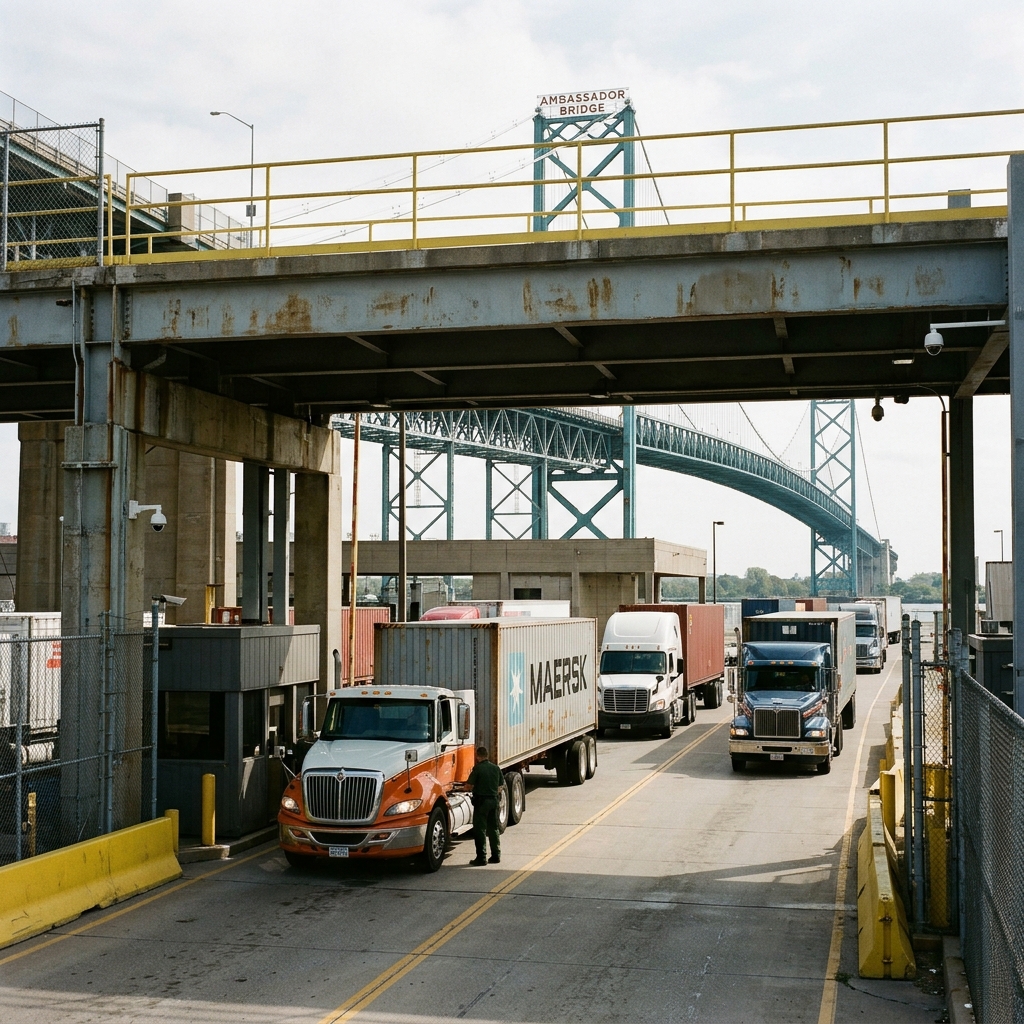
Support for Trump's Canada tariffs is strongest in the auto and steel wings of the U.S. labor movement, according to CBC's review of major federations. UAW President Shawn Fain has argued that a 25% tariff on Canadian vehicles and parts can force automakers to shift production to U.S. plants covered by USMCA wage rules. The United Steelworkers support the 25% Section 232 steel and aluminum duties, which apply to Canadian metal shipped through the Ambassador Bridge and Great Lakes ports. Both unions see CBP audits of vehicle content as the enforcement test.
The split inside labor is not a simple partisan story. UAW locals in Michigan and Ohio see the tariffs as leverage against plants in Ontario that pay lower wages and receive provincial subsidies. USW locals in Pennsylvania and Indiana want the White House to keep the metal duties even if Ottawa retaliates against U.S. exports. CBC reported that some union staff worry about Canadian counter-tariffs on union-made goods, including appliances, bourbon and agricultural equipment. Those goods move through CBP ports of entry in Buffalo, Detroit and Cleveland, where inspection delays already add cost.
The UAW's public position has a specific ask. The union wants CBP to use USMCA rules of origin to count North American content and to reject parts that rely on low-wage Canadian or Mexican labor. It also wants the Office of the U.S. Trade Representative to press Canada on provincial electric-vehicle subsidies. CBC noted that automakers warn a 25% tariff on parts can hit vehicles that cross the border six or seven times before final assembly. That warning has not moved the UAW's leadership, which sees the tariff as a tool to reset production decisions.
2. Teamsters Freight Locals Warn 25% Canada Tariff Hits Blue Water Bridge Volumes
The Teamsters are harder to pin down. President Sean O'Brien has backed tariff use in principle, and the union's freight divisions want rules that protect U.S. trucking jobs. CBC's reporting shows that local officers on the Blue Water Bridge corridor in Port Huron, Michigan, and on the Ambassador Bridge in Detroit are more worried about volume losses. A 25% tariff on Canadian goods can cut loads of auto parts, food and building materials. CBP and CBSA inspection queues at those crossings already cost carriers $200 to $400 per hour in detention and driver time, according to freight brokers cited by CBC.
The energy carve-out matters for Teamsters locals in the Midwest. Trump's order sets a 10% tariff on Canadian energy, lower than the 25% rate on other goods. CBC reported that union dispatchers see diesel prices and cross-border fuel surcharges as immediate cost drivers. A one-cent increase in diesel at the pump can add roughly $400 to a long-haul round trip from Chicago to Toronto. Rail is another pressure point. CPKC's yard in Kansas City and Canadian Pacific's line through Moose Jaw handle parts and grain that face new customs coding under the tariff schedule.
Teamsters Canada and the International Brotherhood of Teamsters have separate political channels, and that divide complicates the U.S. union response. CBC found that U.S. freight locals want exclusions for parts that cross the border multiple times, while Canadian locals want Ottawa to retaliate against U.S. trucking services. The practical result is a lobbying push at CBP and the Department of Homeland Security for faster clearance and clearer rules of origin. Without those rules, carriers face higher bond requirements and longer dwell times at Pacific Gateway ports in British Columbia and at the Blue Water Bridge.
3. AFL-CIO Trade Staff Seek USMCA Panel Review and Product Exclusions
The AFL-CIO's trade policy staff has taken a more cautious line than the industrial unions. CBC reported that the federation wants the White House to use USMCA dispute panels before imposing broad tariffs on Canada. The federation worries about legal risk. A tariff that fails a USMCA challenge can be refunded, and CBP then faces a backlog of claims from importers. The AFL-CIO also wants product exclusions for inputs that U.S. factories cannot source domestically, including specialized Canadian parts used in medical devices and farm machinery.
That position puts the federation close to the Canadian Labour Congress on process, though not on politics. CBC's review found that both labor centers want tariff decisions tied to enforceable labor and environmental standards. The difference is that U.S. unions want CBP to enforce USMCA labor rules at Canadian plants, while Canadian unions want the same scrutiny applied to U.S. plants in right-to-work states. The CRA and IRS also enter the debate because tariff exclusions affect corporate income tax deductions and transfer pricing for cross-border affiliates.
AFL-CIO affiliates in retail and public services have a different exposure. They buy Canadian lumber, newsprint and food products, and they face higher prices when tariffs raise input costs. CBC reported that some affiliates want a narrow tariff schedule that targets finished goods and spares intermediate inputs. That request has met resistance from USW and UAW locals, which argue that broad tariffs are the only way to stop transshipment. The fight now runs through USTR comment dockets and CBP ruling requests, where companies seek exclusions product by product.
4. Ottawa's Retaliation List Tests U.S. Union Solidarity Before 2026 USMCA Review
Canada's retaliation list is designed to split the U.S. labor coalition. CBC reported that Ottawa's initial targets include Florida orange juice, Kentucky bourbon, Wisconsin appliances and Pennsylvania steel products. Those choices hit states with Republican senators and union households. The Canadian Labour Congress and Unifor have urged Ottawa to keep pressure on U.S. policymakers while sparing Canadian workers who depend on U.S. parts. The Bank of Canada has warned that a prolonged tariff fight can cut Canadian GDP by 1.5% to 2%, and the Federal Reserve has flagged higher goods inflation as a risk to its 2% target.
The 2026 USMCA joint review is the next formal checkpoint. CBC's reporting shows that U.S. unions want the review to tighten rules of origin and raise the regional value content for autos from 75% to 80%. Canadian officials want the review to preserve dispute panels and prevent unilateral tariff action. A USMCA panel ruling against the tariffs would force CBP to refund duties and could reopen the political fight inside the AFL-CIO. The outcome will shape investment decisions in Ontario's auto corridor, Michigan's battery plants and the CPKC rail network that links Monterrey, Kansas City and Toronto.
For investors, the union split matters because it affects the duration of the tariffs. If the UAW and USW hold together with the White House, the duties can survive legal challenges and CBP enforcement delays. If the Teamsters and AFL-CIO retail affiliates join Canadian and business groups in a USMCA challenge, the tariffs face a higher risk of refunds and early removal. CBC reported that some U.S. unions already seek carve-outs for parts that cross the border multiple times. Those carve-outs can lower effective tariff rates without changing the headline 25% rate.